









Three Major Highlights of Generative AI Technology in 2026: From SORA 2 to Nano Banana Pro, Image Generation Tools Usher in a New Era of Intelligent Marketing
Catalog
- As the AI boom continues to heat up, why has generative AI transformed the visual content industry?
- Essential Guide to Generative AI : 3 Key Advantages and the Latest AI Design Tools
- Popular AI Visual Generation Tool – SORA 2
- Popular AI Image Generation Tool – Nano Banana Pro
- Exciting Generative AI Marketing Cases at Home and Abroad: Enhancing Interactive Experiences with AI Image Generation
- 2025 United States Street Generative AI Interactive Art – Stephanie Dinkins
- 2025 AI‑Generated Christmas Ad – Coca‑Cola
- Generative AI Virtual Customer Service Debuts at a World-Class Expo — King One Design × ICOM
- AI Image Generation Injects Innovative Energy into Educational Activities – King One Design × NSTC
- AI Image Generation Drives Smart Museums – King One Design × NSTM
- Generative AI Empowers Smart Marketing: Human-AI Collaboration as the Key Breakthrough
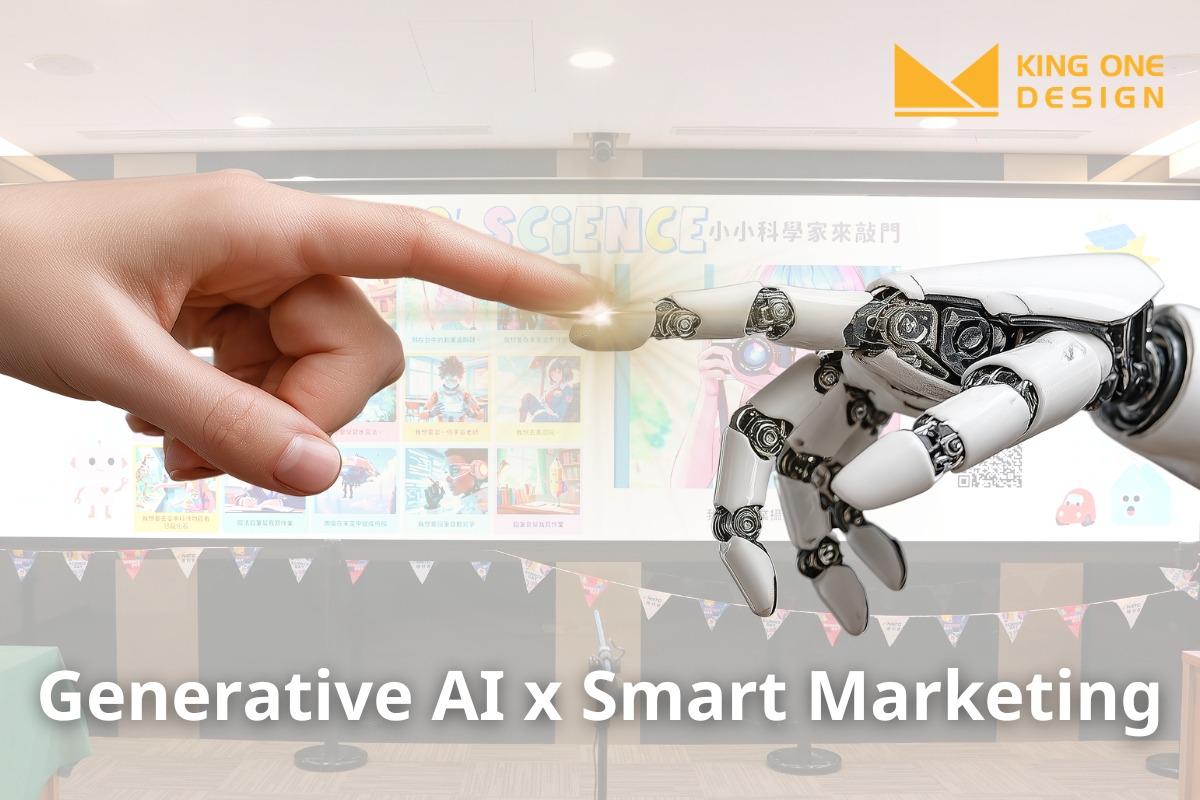
Since 2022, AI generation tools have experienced rapid growth and quickly penetrated the marketing, design, and creative industries. As technology continues to advance, learning and applying generative AI tools has become a major trend in both academia and industry. In a CNN interview, NVIDIA CEO Jensen Huang stated frankly: “AI technology is evolving from a tool into the core of productivity. Professional skills are no longer the only competitive moat. Those who fail to transform from technical executors into value creators may face job displacement.”
As we enter 2026, applications of generative AI will be further upgraded, enabling the creation of more refined text, images, videos, and audio. The visual content industry must confront the challenge of leveraging AI to enhance creative ideation efficiency and strengthen content appeal. Meanwhile, industry professionals need to continuously learn how to effectively utilize AI design tools and integrate them with marketing strategies in order to generate greater value conversion and market impact for enterprises.

The AI wave is a double-edged sword of both opportunity and challenge, requiring a shift in mindset—from competing with AI to collaborating with AI.
As the AI boom continues to heat up, why has generative AI transformed the visual content industry?
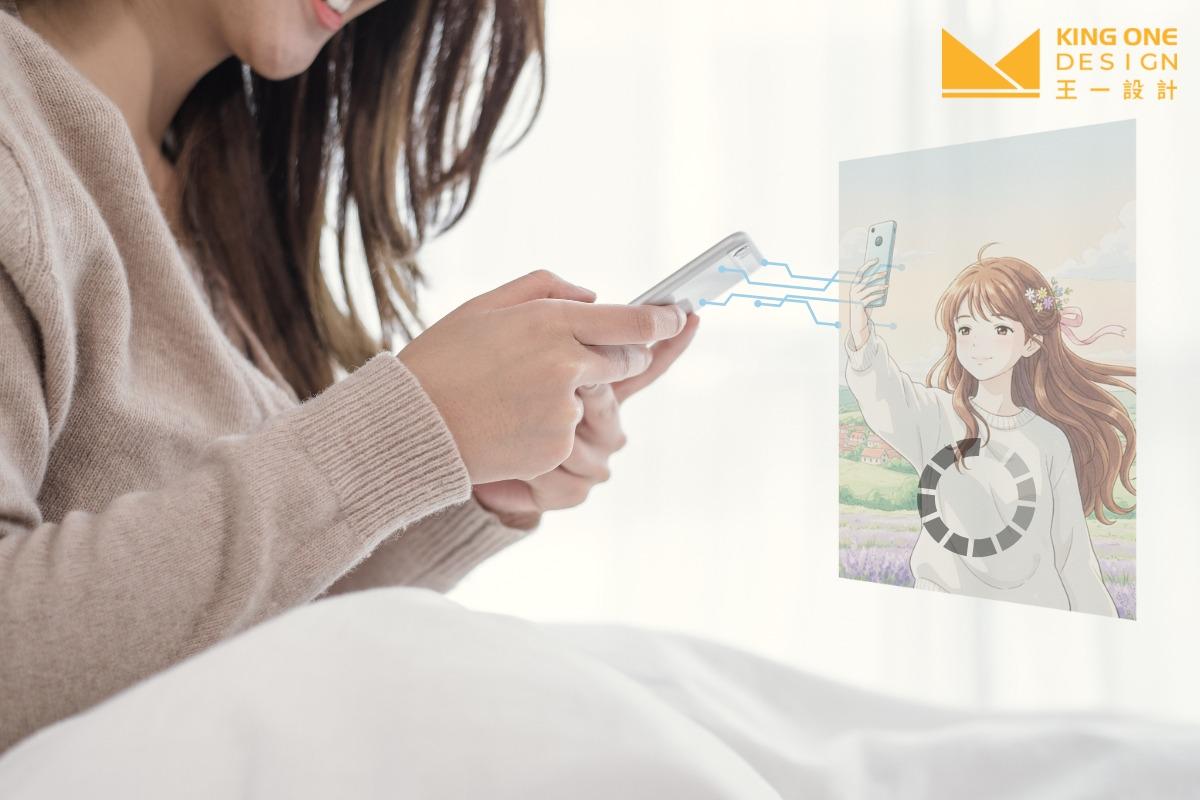
Image source: King One Design
In recent years, whether on Instagram, Facebook, TikTok, or the emerging Threads platform, we often see various types of AI-generated media content. From Ghibli-style avatars, pixelated characters, and idol photos, to the recent buzz-worthy SORA videos that blur the line between real and fake, generative AI content has become deeply integrated into our daily lives.
AI generation tools not only help us create shared topics of conversation with friends on social media but are also widely applied in creative ideation and integrated into production workflows across industries, significantly boosting content creation efficiency. The emergence of generative AI has gradually transformed the way content is produced and has also influenced audiences’ viewing habits and expectations.
In today’s AI-driven era, learning to master ever-evolving AI design tools, understanding the commercial value of AI-generated content, improving work efficiency, and even applying it to corporate marketing has become an unavoidable trend in professional development.
Essential Guide to Generative AI : 3 Key Advantages and the Latest AI Design Tools
AI generation tools have become a new trend in industry applications and development, with three core features:
♦️ Ease of Learning
♦️ Low Cost
♦️ Convenience
These three characteristics allow users to quickly get started and apply the tools. By simply inputting prompts, users can generate high-quality images, videos, or music, providing instant satisfaction and shareable content.
Take content creation on social media as an example. In the past, creators had to go through time-consuming steps such as research, editing, and content integration to produce an article or video. However, the emergence of AI generation tools has greatly improved material production efficiency. Whether it’s scripts, articles, images, animations, or music, AI can now generate content quickly.
Creators can then use AI outputs as raw material and combine them with their own ideas to produce fresh, innovative works. Even users without professional backgrounds in design, photography, or music can leverage AI tools to quickly become industry newcomers.
AI generation tools lower the barrier to entry, and with proper usage, anyone can acquire versatile skills and significantly improve work efficiency.
Now, let’s explore the latest AI trend tools and master new ways of producing visual content for the future!
Popular AI Visual Generation Tool – SORA 2

Image source: Open AI
On September 30, 2025, OpenAI officially announced the launch of SORA 2. Compared to the original SORA model released in 2024, SORA 2 achieves significant breakthroughs in image generation quality, storytelling fluency, and audio synchronization, marking an important milestone in AI-powered video creation.
SORA 2 can effortlessly generate content ranging from cinematic short films and commercial-style advertisements to anime-style visuals. Character movements are natural, camera angles and depth of field can be simulated, lighting and shadows are detailed, and narrative pacing is smoother, bringing AI-generated content closer to professional film and video production standards.
By inputting text instructions that describe desired visuals, camera positions, and stylistic preferences, users can quickly generate dynamic video content with both visual quality and sound. OpenAI has officially included Taiwan in the support list for both the Sora App and Sora 2 web version, with potential gradual access for Taiwanese users in the future.
Whether for content creators, marketing teams, advertising agencies, or the film industry, SORA 2 offers the opportunity to significantly shorten production workflows, reduce costs, and expand creative experimentation possibilities.
Key Advantages of SORA 2 :
♦️ Cinematic-quality visuals and professional camera movements
♦️ Synchronized video and audio generation, greatly enhancing narrative completeness
♦️ High comprehension of instructions, suitable for diverse creative and commercial applications
Popular AI Image Generation Tool – Nano Banana Pro
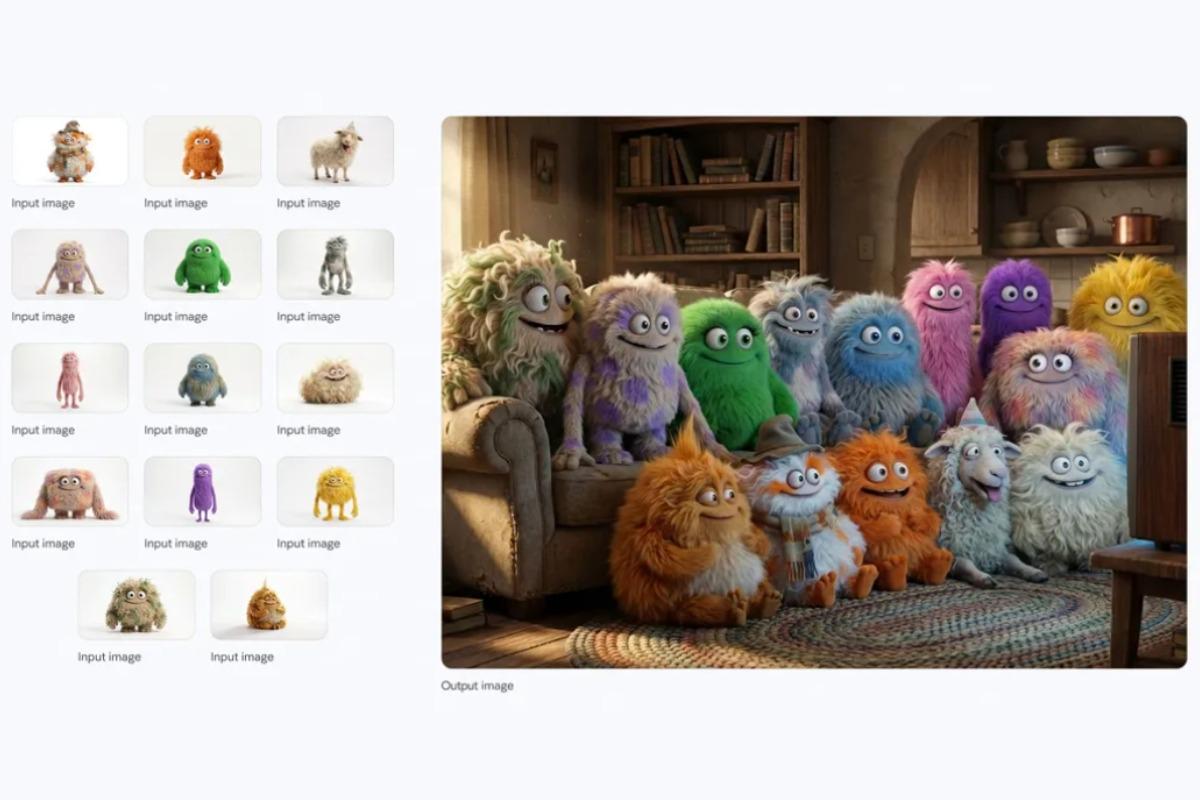
Image source : Google Official Blog
On November 21, 2025, Google launched Nano Banana Pro, an image-generation model built on the Gemini 3 Pro foundation. It optimizes common issues in previous AI image generation, such as spelling errors in text, illogical lighting and shadows, distorted details, and inconsistent character designs, delivering higher accuracy and more stable outputs. This upgrade allows Nano Banana Pro to be applied across a wider range of industry processes, including but not limited to:
♦️ Visual conceptualization of product prototypes in the early design phase
♦️ Data visualization and infographic creation
♦️ Marketing poster drafts, educational flashcards, and visual sketches
Currently, general users can experience Nano Banana Pro by selecting the “Generate Image” feature while using the Thinking model in the Gemini app. Free-tier users receive a complimentary quota, after which the system reverts to the standard Nano Banana model.
Exciting Generative AI Marketing Cases at Home and Abroad: Enhancing Interactive Experiences with AI Image Generation
The innovation and widespread adoption of AI generation tools have led creators and businesses to gradually apply AI-generated images in creative projects and smart marketing. Many notable applications have already emerged both domestically and internationally—let’s take a look!
2025 United States Street Generative AI Interactive Art – Stephanie Dinkins
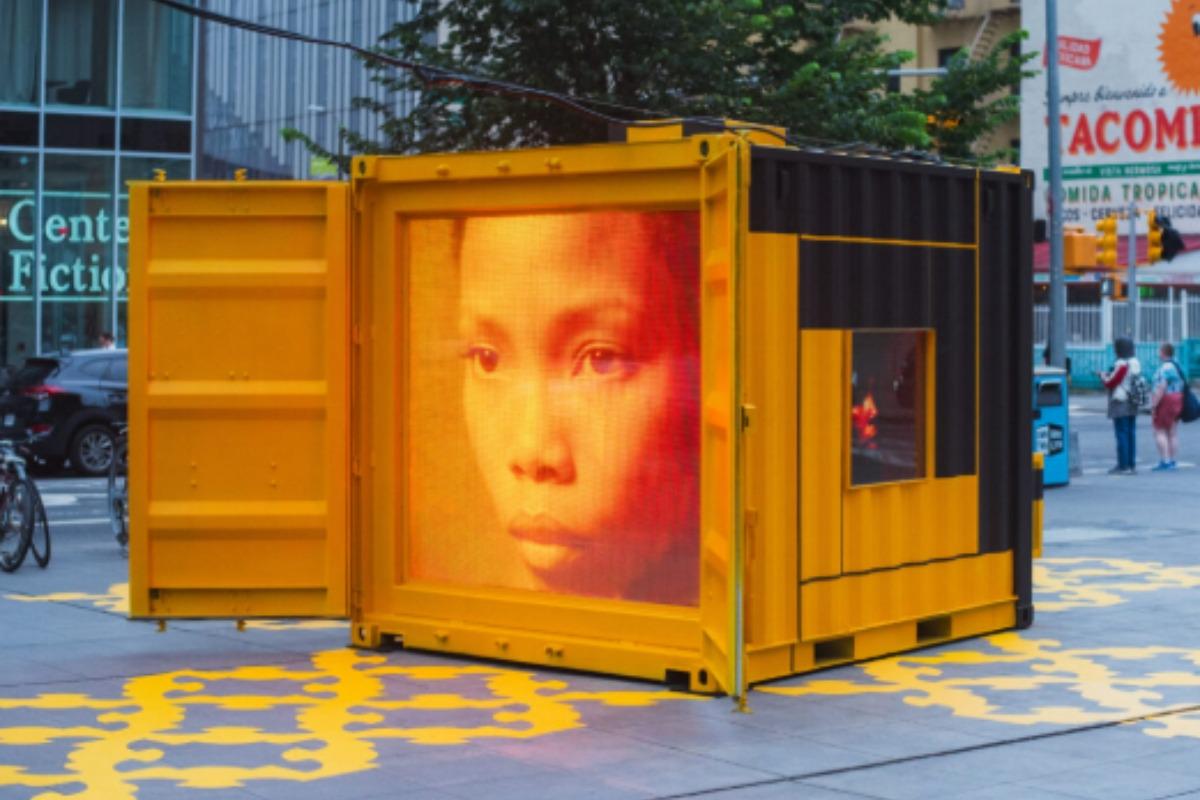
Image source : Avery J. Savage.
From June to November 2025, AI and new media artist Stephanie Dinkins exhibited her work “We Don’t, Who Will?” in Brooklyn, USA, using artificial intelligence as a medium to explore dialogues between race, gender, cultural memory, and history.
In a public plaza in downtown Brooklyn, she created an interactive space inside a repurposed shipping container, inviting visitors to share their personal stories. The system then transformed these narratives into real-time visuals using AI image generation, displayed on screens outside the container, drawing the attention of passersby.
This work not only demonstrates the deep integration of AI image generation with artistic creation but also transforms the audience from passive viewers into active participants, bringing art out of traditional galleries and closer to the public. It establishes a caring, interactive relationship between the artist, the audience, and artificial intelligence—a concept of “care” that Dinkins emphasizes as a core human value.
Advantages of AI Generation in Artistic Creation :
♦️ Enhanced interactivity, making viewers part of the creative process
♦️ Real-time visualization of abstract concepts and stories
♦️ Lowered barriers to art, bridging the gap between audience and creator
2025 AI‑Generated Christmas Ad – Coca‑Cola
At the end of 2025, renowned brand Coca‑Cola released its Christmas commercial “Holidays Are Coming”. The highlight of this ad is that everything—from Coke cans and lively animals to Santa Claus—was generated entirely using Real Magic AI, showcasing the brand’s experimentation with AI-powered creative applications.
The ad sparked two main discussion points: on one hand, younger audiences and tech enthusiasts responded positively, finding it novel and exciting, and were intrigued to see a leading brand apply AI technology to marketing content, fueling expectations for future industry applications. On the other hand, some viewers felt that AI-produced ads lacked the warmth and brand connection traditionally associated with Coca‑Cola’s holiday greetings. This demonstrates that even as AI generation tools advance, audiences still expect content that carries emotional warmth and strong brand alignment. For marketers, the skillful and measured use of AI directly impacts campaign effectiveness and audience sentiment.
Regardless of the mixed reactions, the ad generated substantial buzz for Coca‑Cola, successfully attracting attention from both social media and mainstream media.
Advantages of AI Generation in Smart Marketing :
♦️ Rapid and efficient production of creative content
♦️ Enhanced interactivity and shareability
♦️ Support for personalized and targeted marketing strategies
Generative AI Virtual Customer Service Debuts at a World-Class Expo — King One Design × ICOM
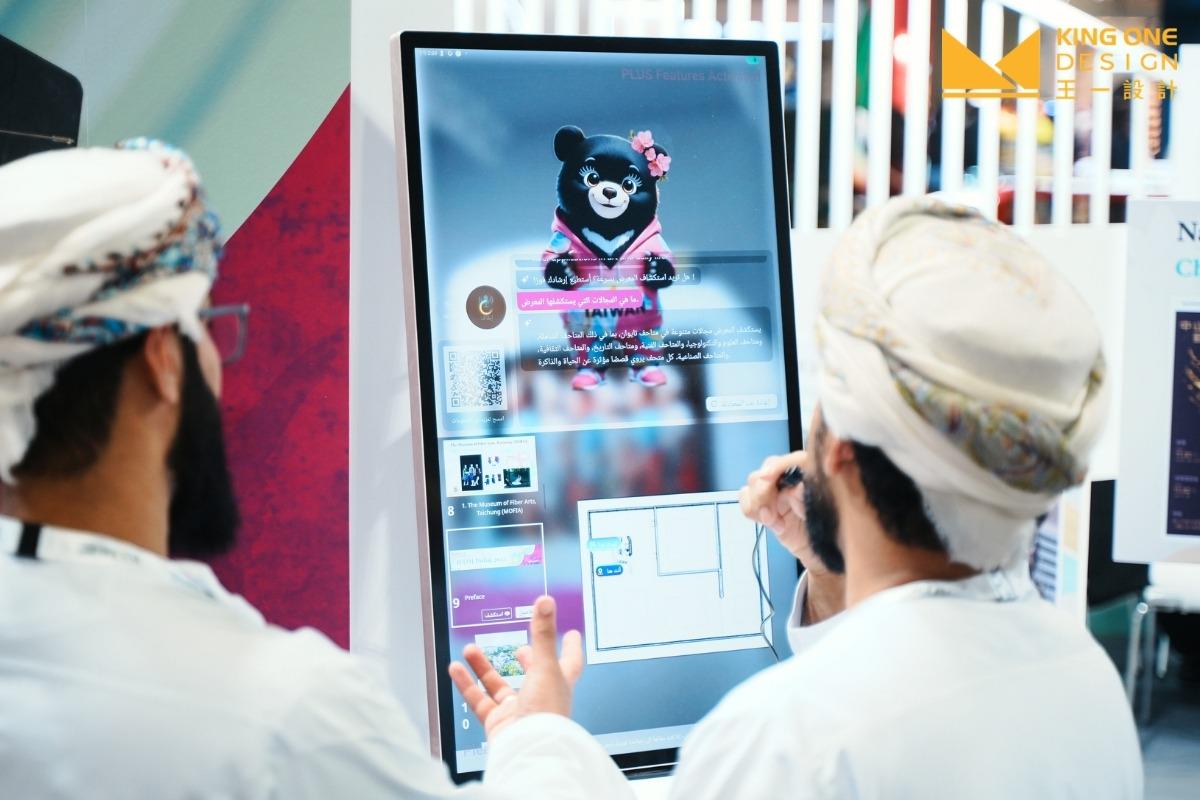
Image source : King One Design
The ICOM Dubai International Museum Conference is the annual global gathering for the museum community, bringing together thousands of museum professionals from around the world. In 2025, the event officially opened at the Dubai World Trade Centre.
King One assisted the Chinese Association of Museums in organizing the Taiwan Pavilion at the ICOM exhibition. A generative-AI–designed virtual customer service character, inspired by the Taiwan black bear, was introduced to interact with visitors from around the world through voice conversations on-site. The AI guide system supports multiple languages and features a lively virtual guide persona, effectively promoting the unique characteristics of Taiwan’s museums—led by the National Palace Museum—on the international stage.
Advantages of using Generative AI in exhibition promotion:
♦️Create customized brand characters that capture visitors’ attention
♦️Integrate with hardware devices such as AI guide machines to increase visitor interaction
♦️ Spark social media discussions and add buzz through cutting-edge technology applications
AI Image Generation Injects Innovative Energy into Educational Activities – King One Design × NSTC
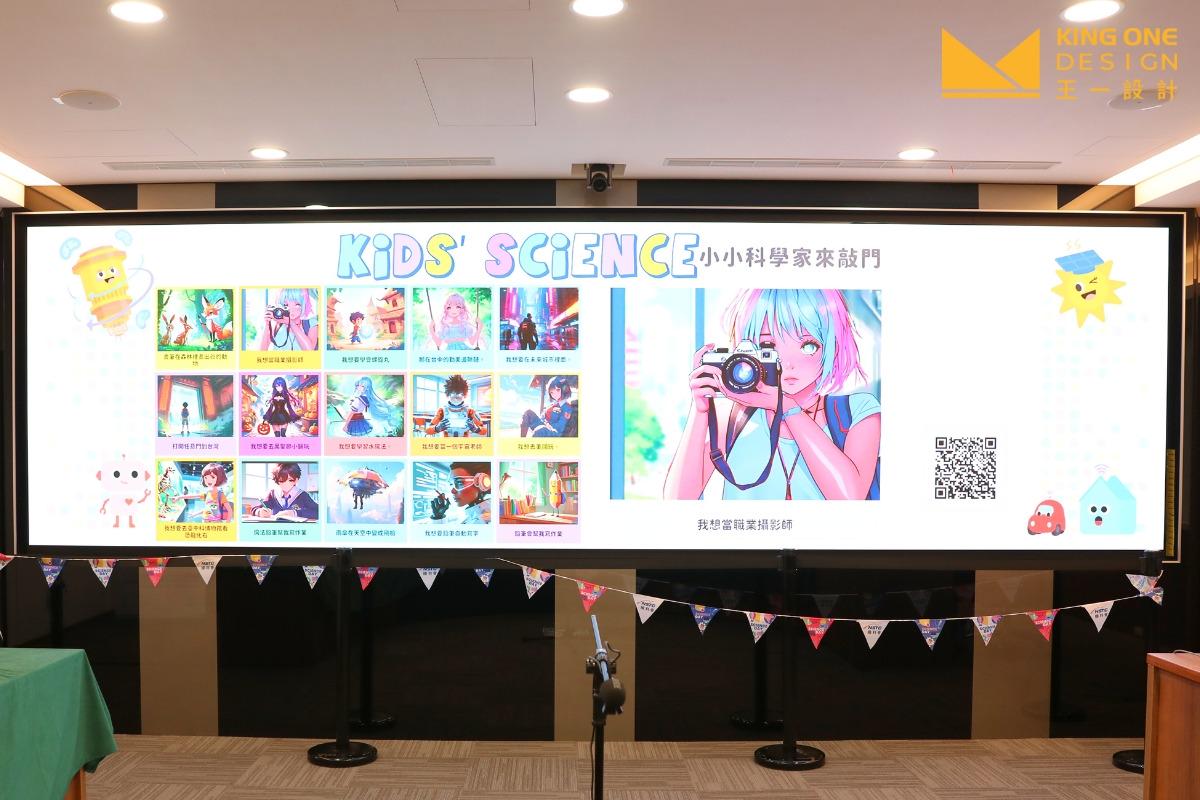
Image source : King One Design
Taiwan’s National Science and Technology Council holds a role similar to the U.S. National Science Foundation, responsible for planning certain national science and technology policies as well as providing funding support for academic research. In 2025, King One Interactive Technology created a full-scale AI “Wish Wall” for the National Science and Technology Council’s “Little Scientists” event. Centered around the theme “Imagination × Technology,” the project integrated AI image generation, allowing children to freely express their visions of future life. Whether it was flying shoes, transparent space classrooms, or pencils that write on their own, AI instantly generated visuals displayed on a large LED screen. This enabled kids to immediately experience a creative dialogue with technology, creating magical “dreams come true” moments.
The interactive design of this event demonstrated the potential of AI generation in education and children’s creative inspiration. It shows how future science education can better align with children’s thinking patterns while injecting novel and fun technological elements into learning activities. Looking ahead, AI image generation is expected to become an essential tool for various STEM education programs, science camps, and creative workshops, delivering immersive, interactive, and engaging learning experiences.
Advantages of AI Generation in Educational Promotion :
♦️ Stimulates students’ creativity and imagination
♦️ Enhances teaching interactivity and student immersion
♦️ Customizes learning experiences
AI Image Generation Drives Smart Museums – King One Design × NSTM
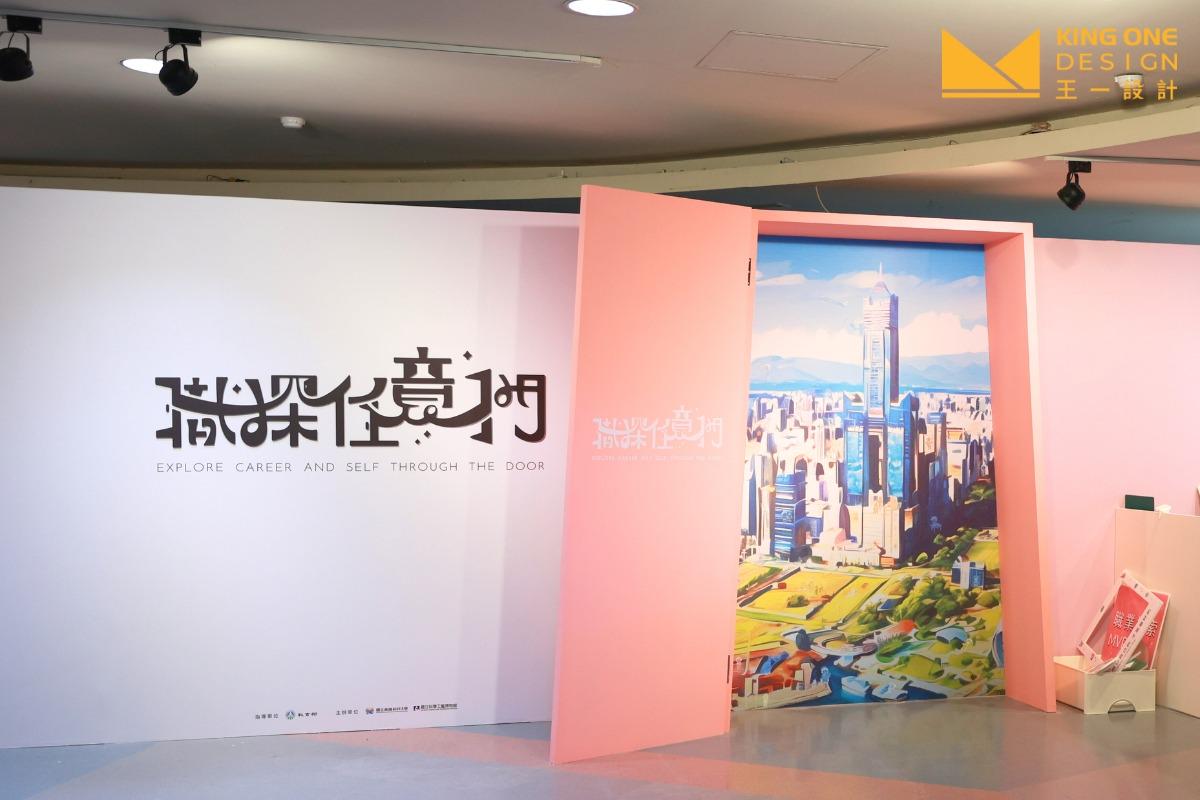
Image source : King One Design
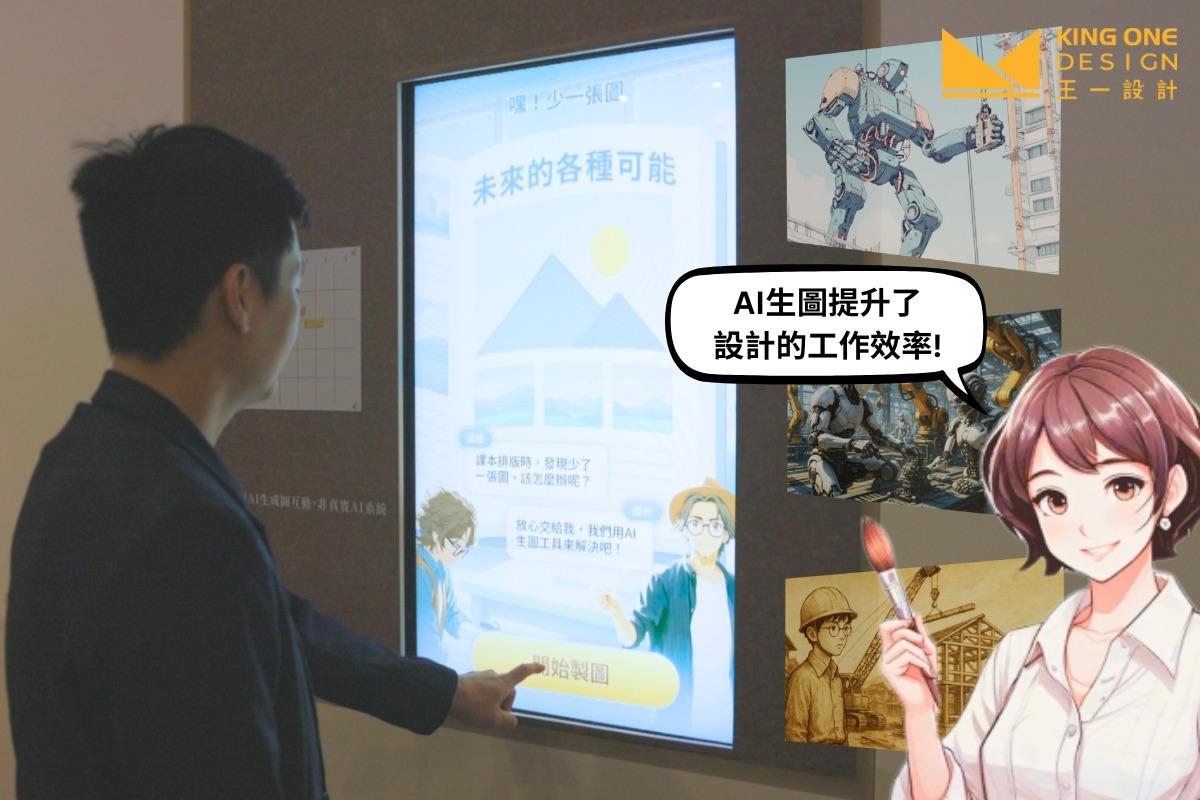
Image source : King One Design
The Kaohsiung Science and Technology Museum is positioned as a city-level science museum on a global scale, serving as Southern Taiwan’s primary center for science education and technology exhibitions, while also integrating local industry features with international exchange functions. From August 2, 2025, to December 31, 2027, the Kaohsiung Science & Technology Museum is hosting the immersive, interactive career-exploration exhibition “Career Exploration Anywhere”. King One Design served as the curator and planner, integrating digital technologies such as AR/VR, immersive projection, motion-sensing interaction, and gamified challenges. This allows visitors to “learn through play and play through learning” while gaining in-depth insights into the characteristics and daily routines of various professions.
One of the exhibition’s highlights is the AI image generation interactive mini-game designed by King One Design, which specifically introduces the roles of layout/printing professionals and graphic designers. Visitors can freely select three AI-generated elements—such as robots, house-building, or cute-style visuals—and the system instantly generates corresponding images.
This approach not only gives visitors an intuitive understanding of how AI tools are applied in the graphic design industry—from creative ideation to draft design and asset production—but also provides deeper insights into the professional characteristics of visual content creators.
In recent years, the concept of smart museums has gradually emerged. By integrating digital interactive installations and AI-generated image games, the visitor experience can shift from passive observation to two-way engagement. Audiences are no longer merely receiving information—they can interact with exhibition content and participate in the creative process, gaining a deeper understanding of how technology connects with career exploration and creative education.
This immersive, interactive approach not only enhances the fun of learning but also provides a viable model for the future development of smart museums, demonstrating the potential of technology to empower education and cultural communication.
Advantages of AI Generation in Smart Museums:
♦️ Real-time visualization of professional knowledge and concepts
♦️ Transforms exhibitions from one-way viewing to two-way interaction
♦️ Flexible updating and expansion of generated content
As the technology matures, AI generation is set to shape increasingly diverse applications across museums, education, and various industries in the future.
Generative AI Empowers Smart Marketing: Human-AI Collaboration as the Key Breakthrough
In an era where AI image generation is becoming increasingly widespread, AI technology and design tools can quickly produce high-quality assets, yet the warmth and emotional judgment of human thinking remain irreplaceable. AI can rapidly generate visuals and provide creative inspiration, but only when creators infuse their own experience, expertise, cultural understanding, and emotions can a work truly resonate with its audience.
When AI becomes a co-creation partner rather than just a tool, human-AI collaboration preserves the uniqueness and humanity of creation while fully leveraging AI’s efficiency and versatility. In the future, creativity and marketing empowered by AI—but enriched with human warmth—will be more engaging, immersive, and emotionally meaningful. Continuously learning new generative AI tools and applying professional knowledge flexibly is key to keeping pace with the AI era.
At the beginning of 2026, the latest open-source personal AI assistant — OpenClaw (formerly known as Moltbot) — sparked widespread discussion. Future AI applications will no longer be limited to single functions such as image, picture, or text generation. Instead, they will evolve to handle more complex, multi-step workflows, becoming more proactive and intelligent assistants.
For example, OpenClaw can remotely help users organize key points from meetings and create presentations, make restaurant reservations, and automatically draft and send emails. The rise of autonomous AI symbolizes that human–AI collaboration is entering a new stage. It is set to reshape industry structures and workplace culture, with its vast potential and expansive possibilities gradually unfolding, inspiring great anticipation for what lies ahead.
- 1
6 Different Types of Trade Show Booths You Need to Know
Brand Strategy
- 2
What is CIS? Corporate Identity Design that goes hand in hand with exhibition design
Tech Life & Trends
- 3
3D Logo - The Little Secret in Exhibition Design
Exclusive Perspective
- 4
What is the definition of Experiential Marketing? From 5 perspectives, you will get it!
Tech Life & Trends
- 5
6 Steps to Make Your Own Instagram Filter!
Digital Transformation
- 6
Fly Your Own Airplane - AR Interactive Experience Activity with ANA Airlines
Digital Transformation