







【Corporate Interview】Bringing Picture Books to Life: How Interactive Curation Reveals the Essence of Storytelling — An Interview with Stephanie Chen
Catalog
- From Turning Pages to Stepping into Stories: Defining New Dimensions of Reading through Digital Curation
- A Multidimensional Curation Experiment: Bringing Digital Stories to Life with the Audience
- Interactive Curatorial Design for All Ages: AI Technology and Social Media Resonance
- Translating Technology through King One Design: A Human-Centered Approach to Cross-Disciplinary Dialogue
- Beyond an Exhibition: A Pioneer in Exporting Taiwanese Culture to the World
- Digital Curation Translation Strategies: Empowering Taiwanese IPs with "Mobile" Vitality
- Empowered by King One Design: From 6-Meter Giant Screen Projections to AI Scanning
- Sowing Cultural Seeds: Setting the Starting Point for the Next Decade of Exhibitions.
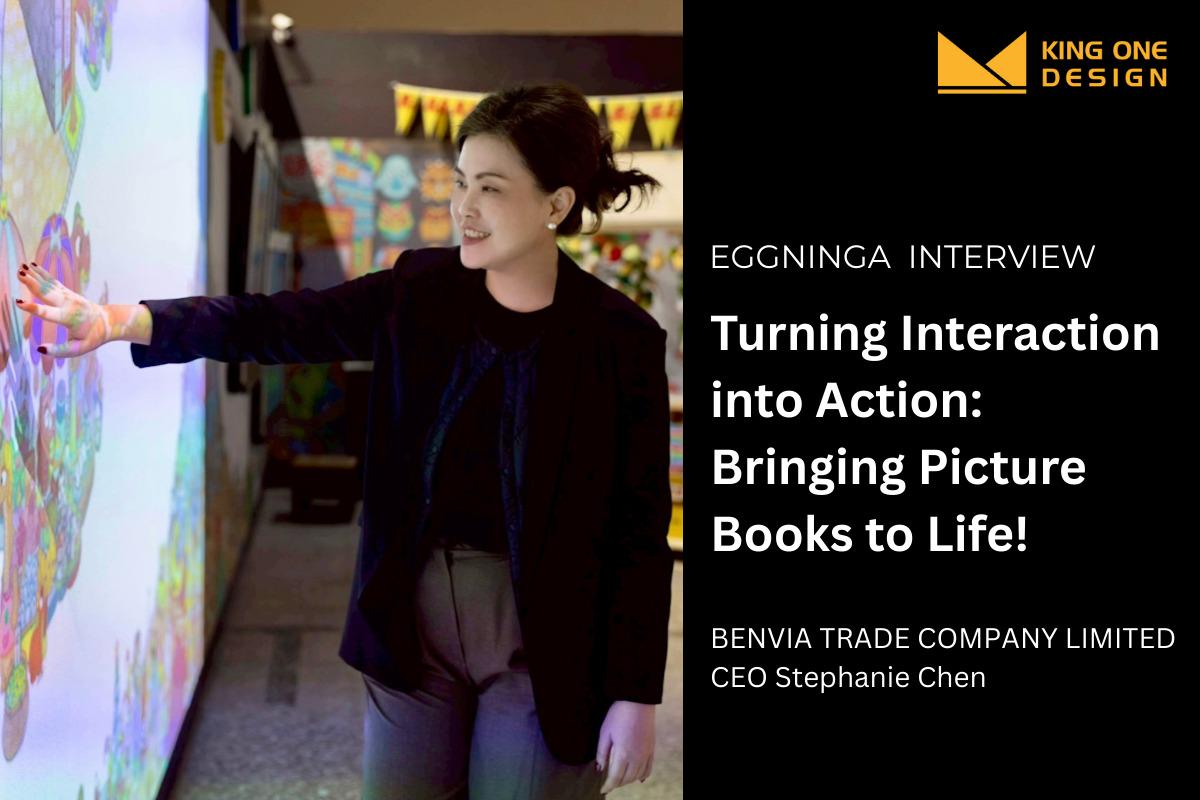
In an era where digital interaction and immersive exhibitions are increasingly intertwined, making cultural content accessible and engaging for a wider audience has become a pivotal challenge for every curator. From the initial concept to the realization of interactive design, every detail reflects a commitment to transforming the audience from passive observers into active participants in the story.
In this exclusive interview, King One Design is honored to invite Stephanie Chen, General Manager and Curator of the Egg Ninja exhibition, along with Anthony Chien, Director of the International Development Service Center at the Commerce Development Research Institute (CDRI). Together, they share their insights on the significance of this exhibition in promoting Taiwan's cultural IP, offer a glimpse into the strategic thinking behind the curation, and discuss their experience collaborating with King One Design on interactive design planning.

"More than just reading a story—it's about stepping inside and making choices. Can reading become something even more powerful?"
This seemingly simple question was the very spark that ignited the creation of the Egg Ninja immersive interactive exhibition.
【Profile】
Benvia Trade Company Limited
➤ Stephanie Chen, General Manager Exhibition Curator and Project Coordinator of the Egg Ninja Exhibition
With a focus on cultural content curation and experiential exhibition production, Stephanie is dedicated to promoting Taiwan’s cultural IPs. She specializes in transforming original IPs from picture books and illustrations into immersive spaces where audiences can "step in, participate, and co-create." By placing content at the heart of her work, she combines curatorial strategy with cross-disciplinary integration to create exhibitions that possess both narrative depth and a strong sense of engagement.
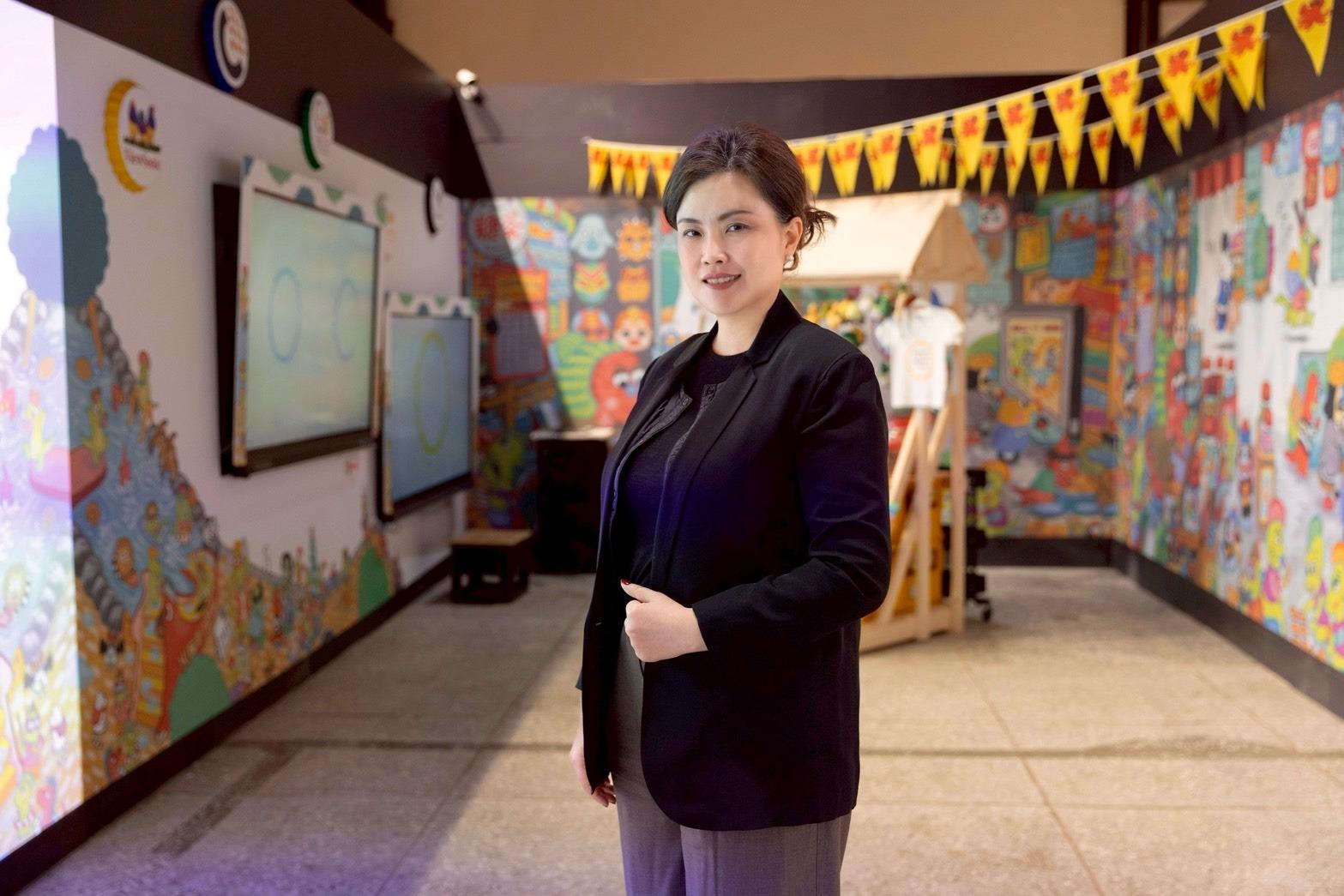
Stephanie Chen General Manager, Benvia Trade Company Limited. Curator & Project Coordinator of the Egg Ninja Exhibition
Image Source: King One Design
From Turning Pages to Stepping into Stories: Defining New Dimensions of Reading through Digital Curation
Q: Could you share with us your role in this exhibition and the story behind how this curatorial journey began?
A: It’s more than just a curation; it’s a "redefinition of the way we read."
In this exhibition, Stephanie Chen took on the dual roles of Curator and Project Coordinator, overseeing every stage—from content translation and interactive design to cross-disciplinary integration. She admits that this was not merely a production of an exhibition, but rather a pioneering experiment to challenge the "boundaries of reading."
"Traditional reading habits often remain a linear process of 'turning the page, understanding, and finishing,'" Stephanie shared. "However, I have always believed that stories should be something one can step into and explore in three dimensions."
Driven by this vision, the team boldly deconstructed and reconstructed the world of the picture book, transforming it into a physical space that integrates action and choice. Here, readers are no longer passive observers; they are the protagonists of the story. Through their physical senses and emotional journeys, they personally live out their own adventures.
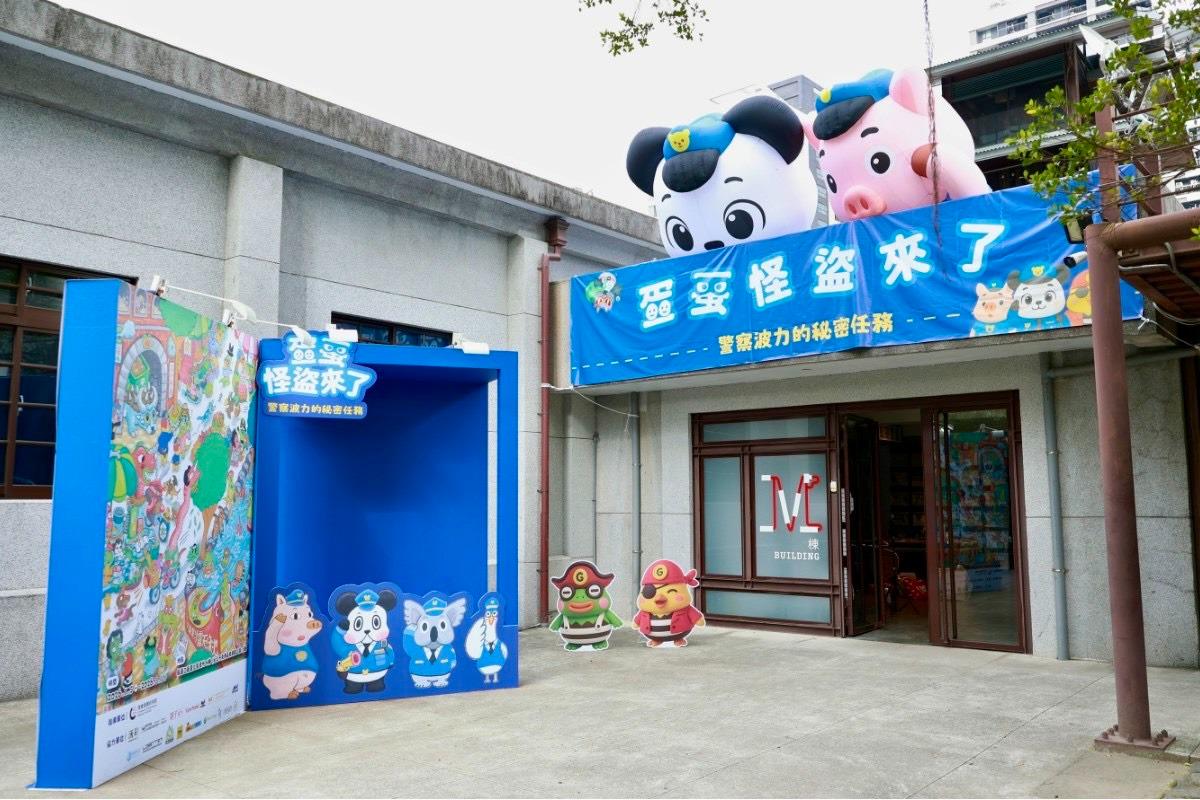
The Egg Ninja Immersive Digital Interactive Game Exhibition is now grandly held at Warehouse M, POPOP Taipei (Nangang Bottle Cap Factory).
Image Source: King One Design
A Multidimensional Curation Experiment: Bringing Digital Stories to Life with the Audience
Q: When characters from a picture book are brought into a physical exhibition space, what is the one thing you are most committed to preserving or most concerned about?
A: When a picture book transitions into a physical exhibition, Stephanie Chen’s primary focus is not on 100% visual replication, but on preserving the essence of "stepping into the story and co-creating challenges with the characters."
The Egg Ninja exhibition is adapted from the original works of the picture book author, Shinzi. These books, which inherently possess a "play-as-you-read" DNA, have been expanded into six major interactive games in the exhibition, including: "Durian Flash Pursuit," "The Labyrinth Challenge," "Strange Grandma and Grandpa's Basketball Challenge," "Whack-a-Ninja," and "Officer Poly’s Poop Gun."
Stephanie emphasized: "We prioritize the process of the experience rather than the final outcome." Within this space, the audience is no longer a passive observer but the protagonist driving the plot. Every experience is anchored in the narrative structure; participants must make choices, accept challenges, and even face failure for the story to progress. This shift from passive understanding to active participation is the key to bringing the picture book to life.
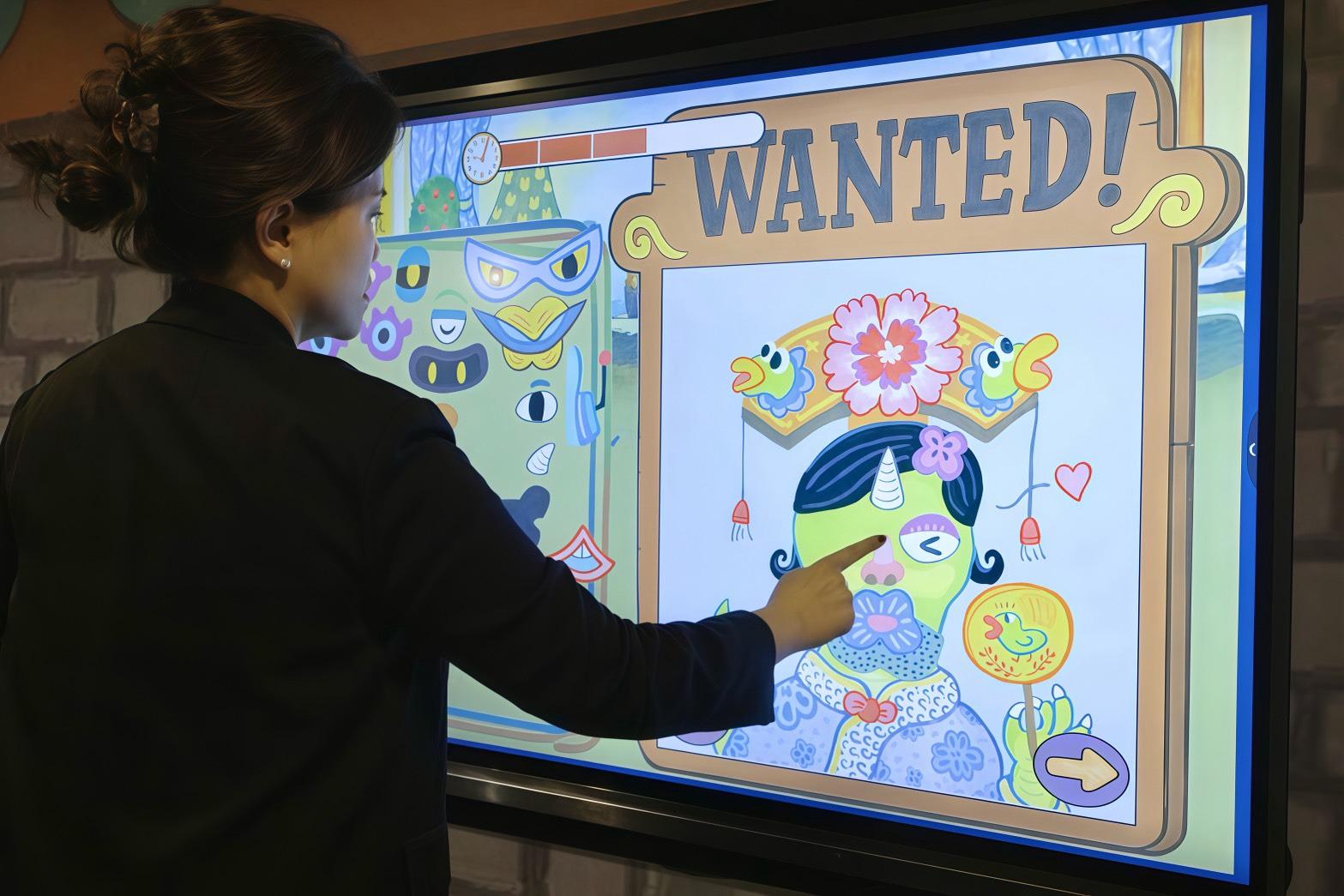
Interactive Exhibition Game: "Who is the Egg Ninja?"
Image Source: King One Design
Interactive Curatorial Design for All Ages: AI Technology and Social Media Resonance
Stephanie Chen observed that modern picture books have evolved into reading material with universal appeal for all ages; thus, the exhibition targeted a multi-generational audience from the very beginning. The six interactive games are not designed to be competition-oriented; instead, they allow the audience to naturally grasp the context and depth of the picture book as they progress through the missions.
Furthermore, to resonate with contemporary digital lifestyles, the exhibition introduced AI-powered character transformation technology. Through specialized software, visitors can transform themselves into stylized "chibi" (cute) characters and create a personalized digital ID. This design not only satisfies the desire for social media sharing but also enables audiences of all ages who enjoy visual creation to find joy in immersing themselves in the exhibition. This allows the influence of local Taiwanese IPs to spread infinitely through digital media.
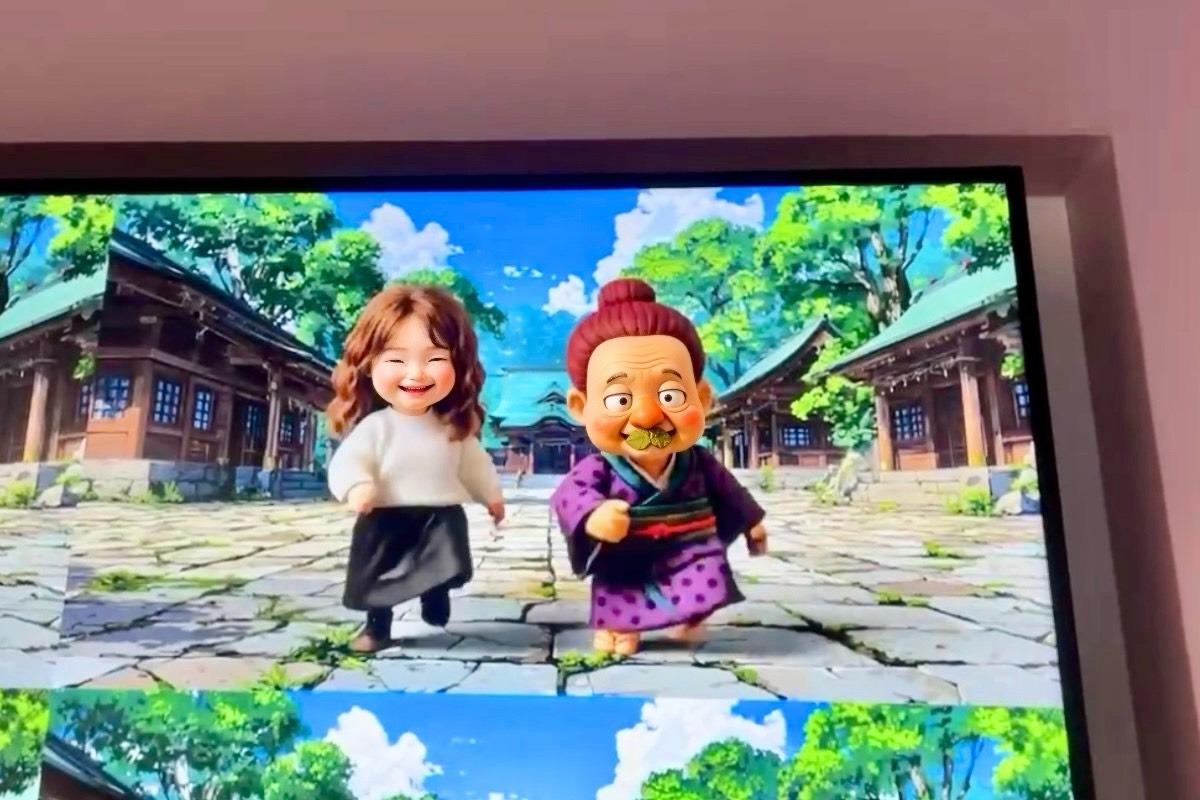
Through AI scanning, visitors can see their AI-generated avatars enter the screen and dance alongside the characters from the picture book.
Image Source: King One Design
Translating Technology through King One Design: A Human-Centered Approach to Cross-Disciplinary Dialogue
Q: During your collaboration with King One Design on the interactive technology components, were there any specific moments or aspects that left a particularly deep impression or came as a surprise?
A: Throughout the interactive design process, Stephanie Chen emphasized in discussions with the King One Design team that technology should remain in the background, with "human-centricity" at the core. She did not want technology to dominate the audience’s experience or imagination, but rather to serve as a supporting element.
Stephanie believes that truly successful interactive design allows the audience to leave the exhibition and still reflect: "Why did I make that choice? How did that choice drive the entire experience?" She also noted that this was precisely the most surprising and meaningful part of collaborating with the King One Design team.
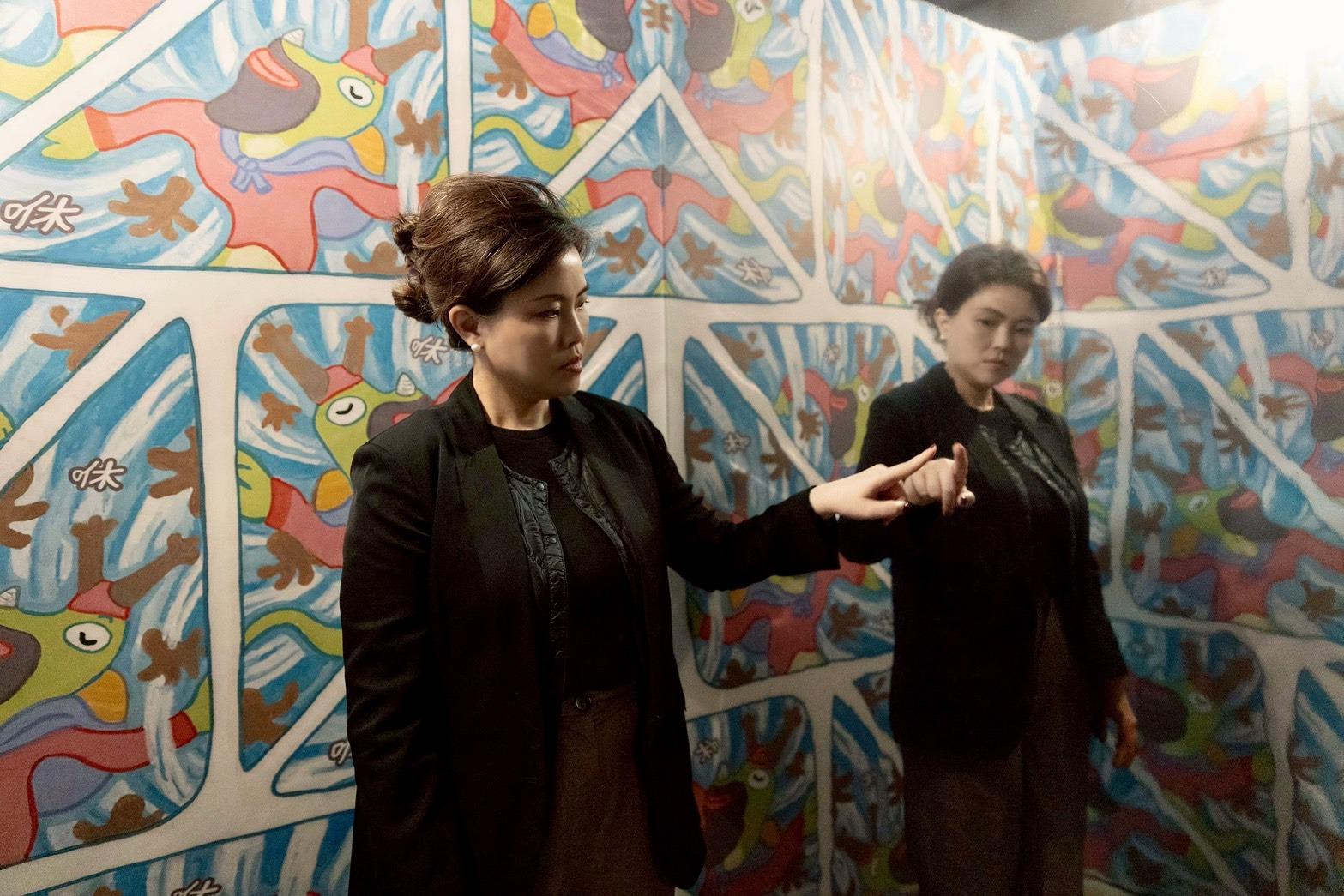
Numerous photo spots are strategically placed throughout the exhibition to encourage audience interaction and allow visitors to capture lasting memories of their experience.
Image Source: King One Design
“Taiwanese IP has the energy, but lacks the stage.” Anthony Chien, Director at CDRI, uses interactive tech to bridge local IP with the public, opening new commercial frontiers through sensory storytelling.
【Profile】
International Development Service Center, CDRI
➤ Anthony Chien Director, Project Coordinator & Integrator for Egg Ninja
With a long-term commitment to the marketization and internationalization of Taiwanese cultural IPs, Anthony views culture as the core of service industry branding and the cornerstone of national competitiveness. He aspires to create economic value while enhancing the nation’s soft power.
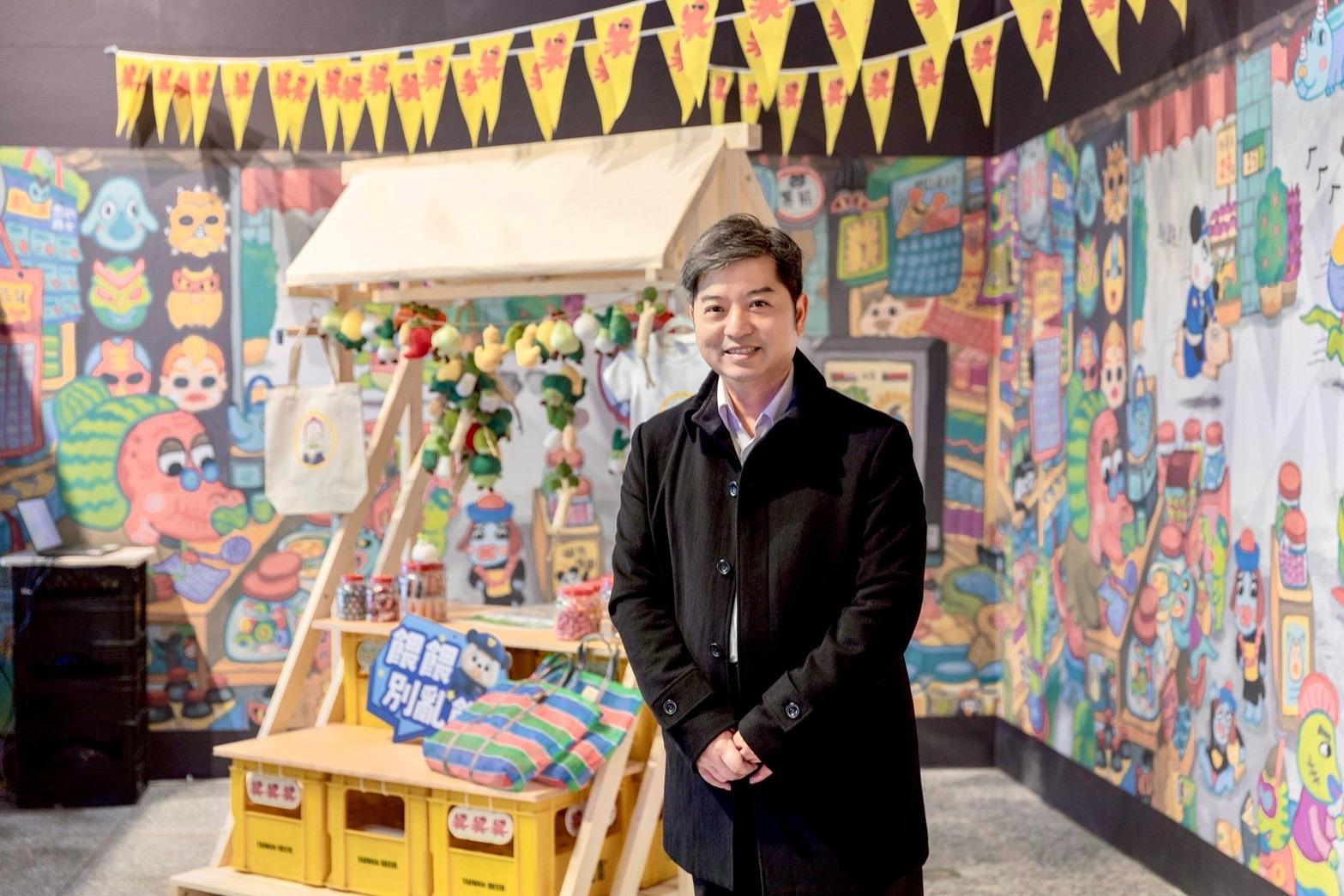
Anthony Chien, Director of Project Coordination and Integration
Image Source: King One Design
Beyond an Exhibition: A Pioneer in Exporting Taiwanese Culture to the World
Q: Director Chien, could you share your role in this exhibition and the original vision behind this collaboration?
A: "Taiwan possesses abundant original IP energy; what is lacking is a commercial stage to connect with the market," points out Anthony Chien, Director at the Commerce Development Research Institute (CDRI). He notes that the most unique aspect of the Egg Ninja exhibition is that it was entirely initiated by the private sector. In this project, CDRI serves as the core "coordinator and integrator," assisting 18 businesses in cross-disciplinary networking to seamlessly align content planning and technological applications with commercial models.
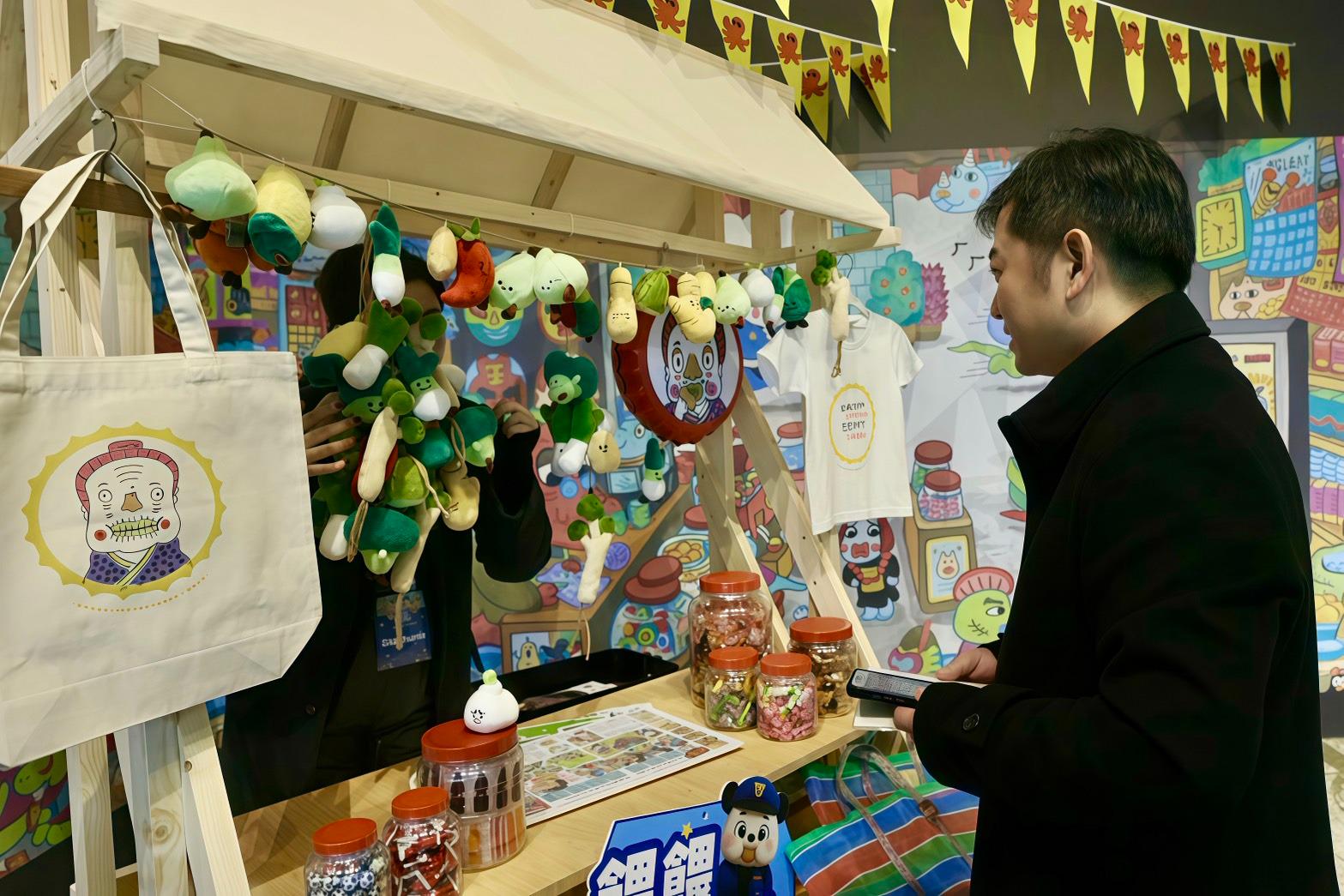
The venue cleverly incorporates a wealth of nostalgic Taiwanese elements, making visitors feel as if they have stepped into a journey through time.
Image Source: King One Design
“Egg Ninja is Here!” is more than just an exhibition—it is a flagship model for cross-disciplinary collaboration and a launching pad for Taiwanese culture to go global. Director Chien states that this is a direct demonstration to the international community: even without relying on government resources, the private sector possesses the capability to successfully commercialize local IPs. The current market validation phase ensures that these IPs can truly integrate into public life and become cultural imprints that resonate with the masses.
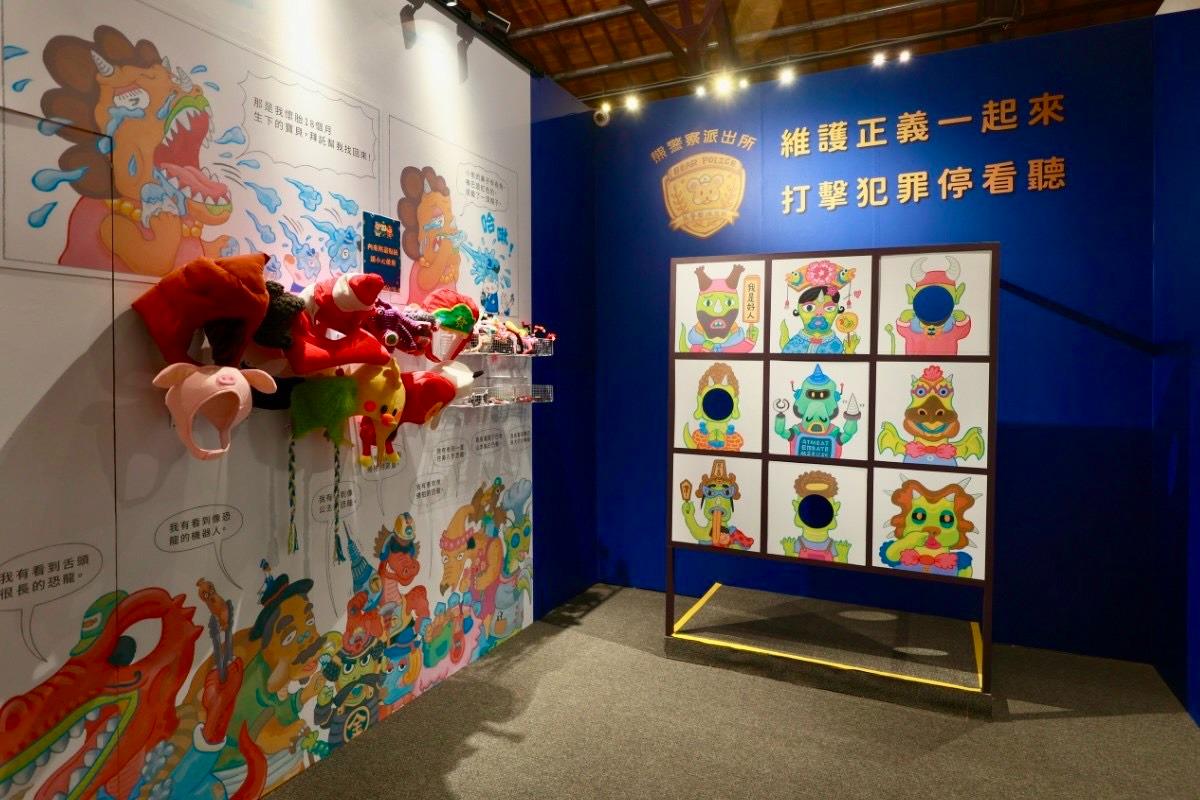
The interactive zone features large-scale illustration backdrops and character headgear for visitors to experience and enjoy.
Image Source: King One Design
Digital Curation Translation Strategies: Empowering Taiwanese IPs with "Mobile" Vitality
Q: Why was "digital interaction" chosen as the core strategy for this curation? What kind of model do you hope this exhibition will demonstrate for the business landscape of Taiwan's cultural industry?
A: “Technology is the bridge that grants cultural content ‘mobile vitality.’” Unlike traditional exhibitions limited to fixed locations, digital transformation allows showcases to break the constraints of time and space. Through the modularization of technological platforms, an exhibition can not only be replicated across Taiwan but also set sail for international markets at any time, transforming cultural value into commercial energy with economies of scale.
“Technology is a necessary investment for development,” Director Chien emphasizes. The six interactive games in this exhibition have reached technical maturity, from scripting to hardware integration. This technological prowess should not only serve foreign IPs; it must precisely empower Taiwan’s original content, allowing local stories to demonstrate unprecedented market competitiveness through the enhancement of technology.
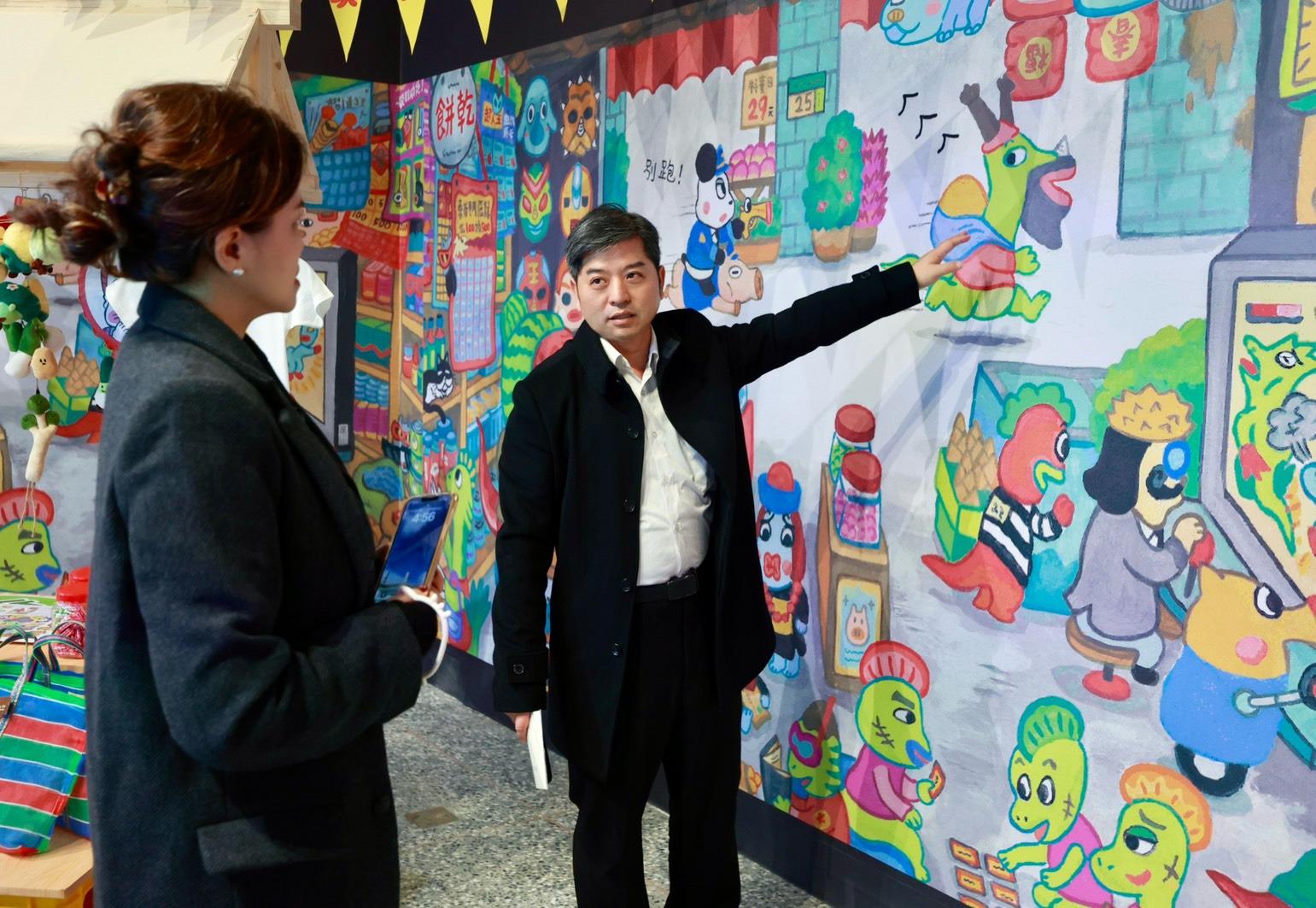
Director Anthony Chien and Director Cindy Chen engaged in an inspiring exchange, exploring new possibilities for traditional Taiwanese cultural IPs.
Image Source: King One Design
Through the strategic networking of CDRI, the exhibition successfully integrated 18 cross-disciplinary partners—including Parenting Hello (CommonWealth Education Group), ViewSonic, and King One Design. This collaboration translated original Taiwanese IP from 2D picture books into "mobile and exportable" digital modules. It not only created profound sensory memories but also demonstrated how the private sector can autonomously integrate resources to snowball the energy of local IP onto a broader global stage.
Q: If more public exhibitions incorporate such interactive designs in the future, what change do you hope to see most?
A: “What I hope to change most is for Taiwanese IP to receive genuine market recognition.” Director Chien perceptively observed that while Taiwan has a highly inclusive culture, the "heat" of local content within the hearts of the public still has room to grow.
Now, both the government and the private sector are working together to "bring this pot of water to a boil." Director Chien firmly believes that culture is a nation's deepest strength. The ultimate goal of this experiment is to equip Taiwanese culture with the power for export—crossing borders to Japan, Korea, and eventually the world—allowing the international community to witness the depth of Taiwan's originality through interaction and laughter.
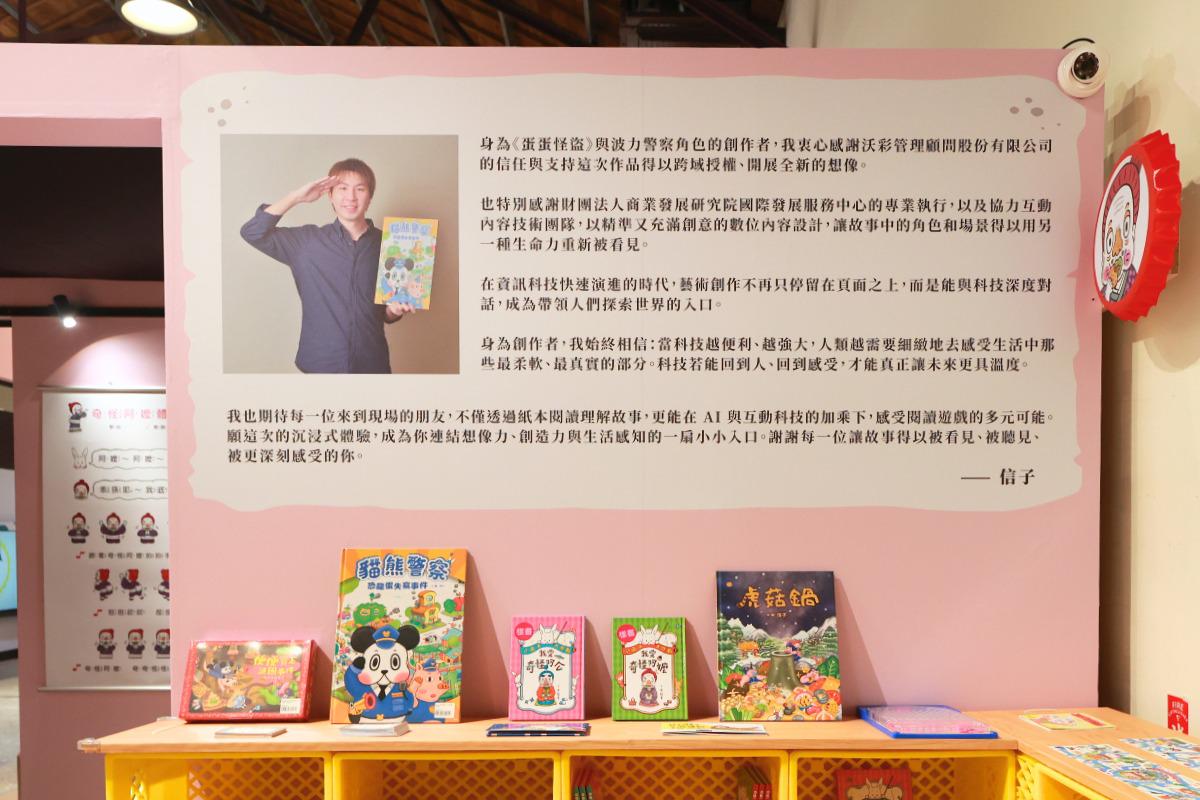
Centering on Shinzi—Taiwan’s pioneering creator of picture book gamebooks—this exhibition leads the audience into an imaginative world of digital interaction.
Image Source: King One Design
Empowered by King One Design: From 6-Meter Giant Screen Projections to AI Scanning
Q: How does King One Design’s interactive technology enhance the storytelling of the exhibition or add value to the visitor experience?
A: In this exhibition, King One Design utilizes a 6-meter-wide large-scale projection wall to create a breathtaking, immersive visual impact. This giant screen completely "magnifies" the world of the picture book, ensuring that the moment visitors step into the venue, they feel as if they are being drawn into a rift in the story's space-time.
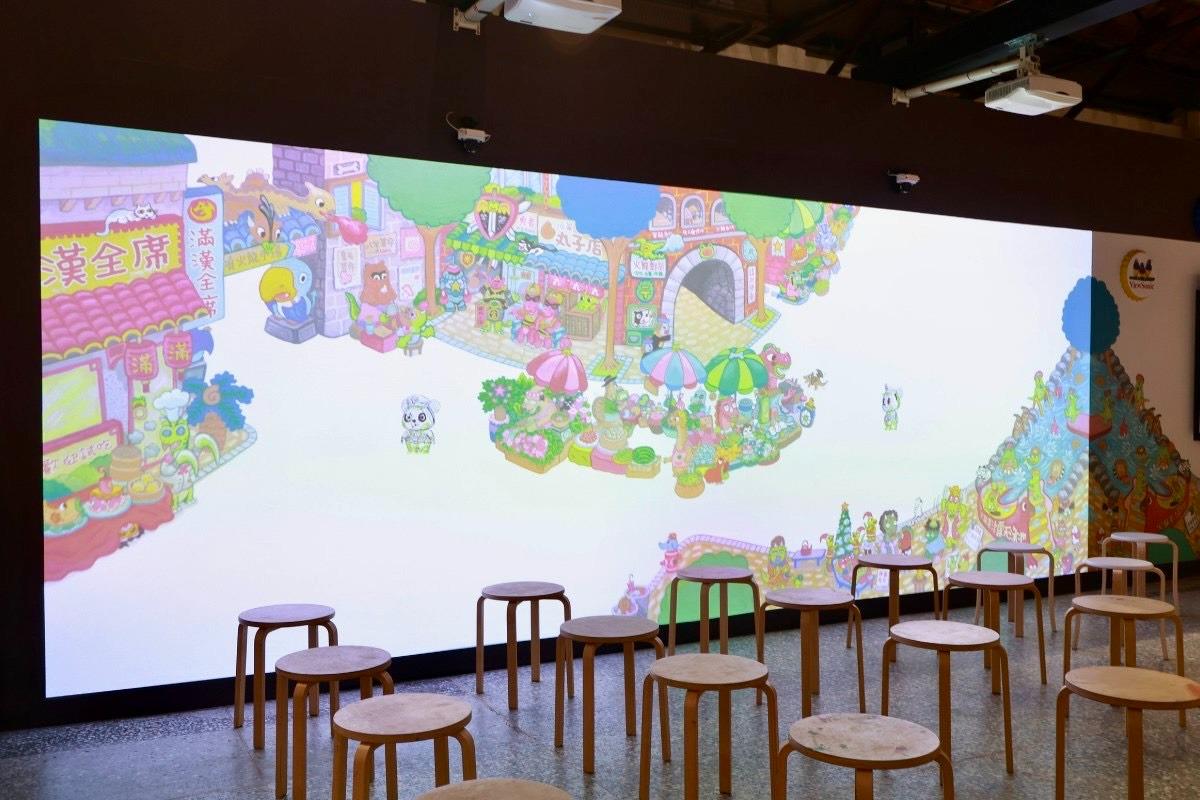
A 6-meter large-scale 3D coloring interactive projection wall immerses visitors in an interactive experience filled with surprises.
Image Source: King One Design
“Technology acts as a key translator here, breathing life into static content,” points out Director Anthony Chien. He notes that the AI scanning technology is perhaps the most delightful surprise for the public. Through scanning, AI transforms visitors into their own unique "digital twins," allowing them to enter this digital universe directly. This design blurs the line between "viewing" and "participating," enabling everyone to step into the story with a one-of-a-kind digital ID.
While these technologies are mature in commercial applications, the integration process was highly challenging. CDRI and King One Design worked together to overcome the difficulties of aligning content with hardware, accumulating invaluable experience in cross-disciplinary collaboration.
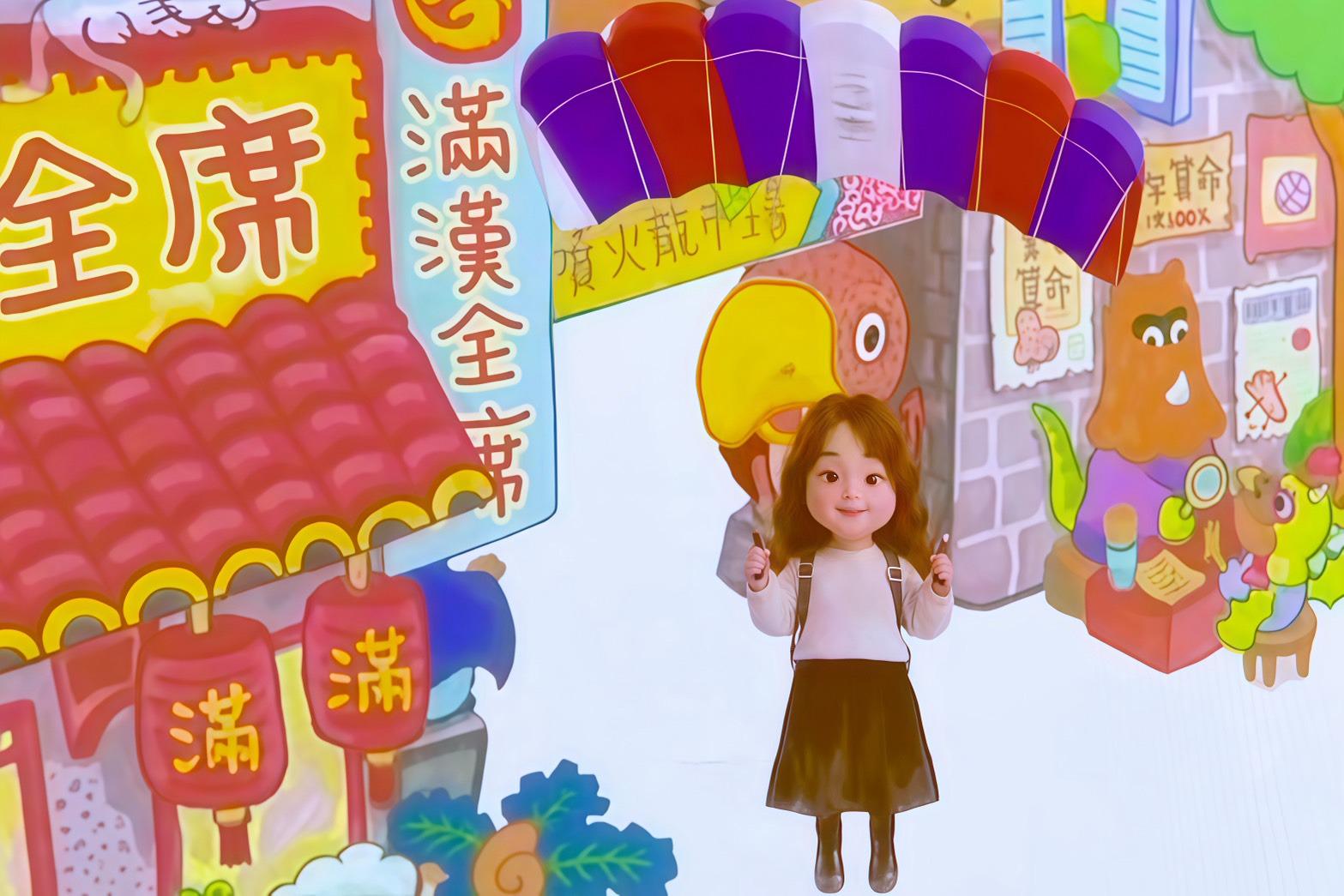
Through AI scanning, personalized AI avatars are instantly projected onto the exhibition walls, enabling real-time interaction with the audience.
Image Source: King One Design
Sowing Cultural Seeds: Setting the Starting Point for the Next Decade of Exhibitions.
“We are playing the role of pioneers in cultural promotion,” Director Chien envisions. He hopes that in the future, more creators and technology providers will join the ranks to digitize and systematize cultural IPs from across Taiwan. This experiment at the Nangang Bottle Cap Factory is more than a one-off event. Looking back ten years from now, it will be remembered as the critical starting point for the digital transformation and commercialization of Taiwanese cultural IPs.
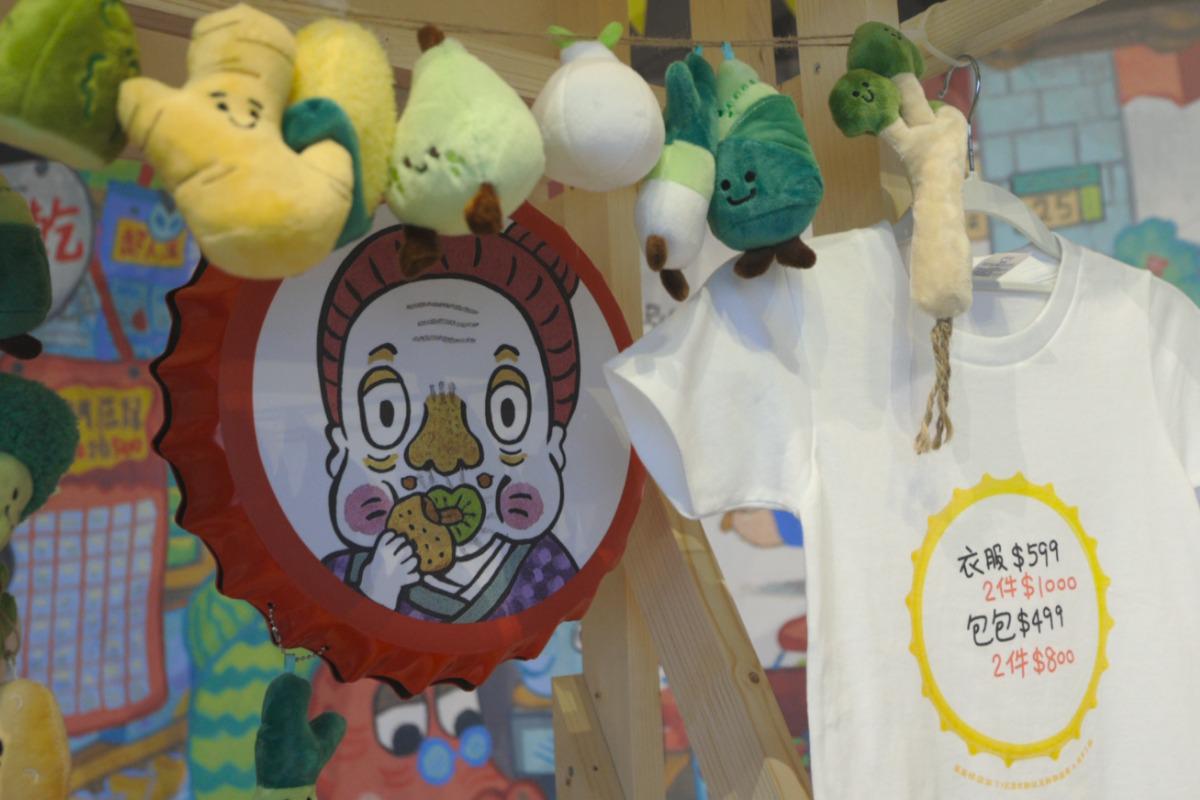
The original Taiwanese IP "Strange Grandma" captivates audiences of all ages with her humorous and distinctive character charm.
Image Source: King One Design

- 1
6 Different Types of Trade Show Booths You Need to Know
Brand Strategy
- 2
What is CIS? Corporate Identity Design that goes hand in hand with exhibition design
Tech Life & Trends
- 3
Five creative ways to enhance your booth appeal
Tech Life & Trends
- 4
3D Logo - The Little Secret in Exhibition Design
Exclusive Perspective
- 5
Fly Your Own Airplane - AR Interactive Experience Activity with ANA Airlines
Digital Transformation
- 6
[Travel around the world] Hannover, Germany
Industry Trends